
Brass vs Stainless Steel Faucets: Which Is Better for Your Project?
Compare brass and stainless steel faucets by durability, corrosion resistance, finish options, compliance, cost, and suitability for residential, hotel, and commercial projects.
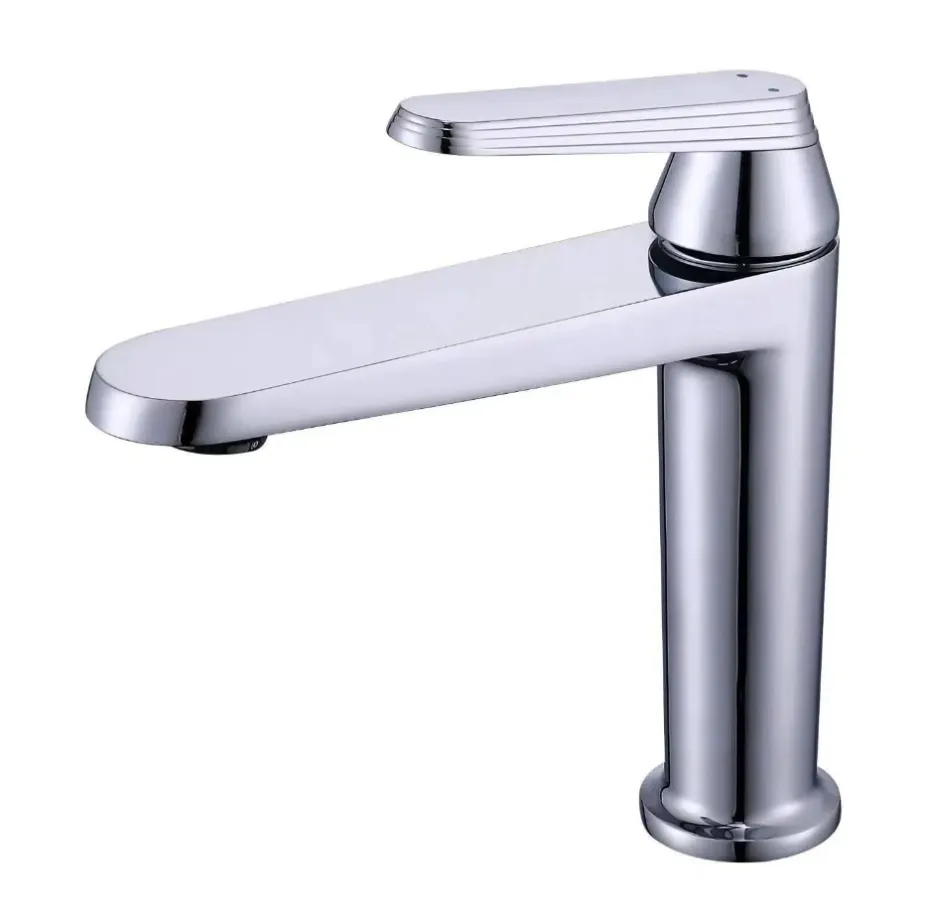
Choosing between a brass faucet and a stainless steel faucet is not simply a matter of deciding which metal is “better.” Both materials can produce reliable faucets, but their performance depends on the alloy grade, manufacturing process, water conditions, surface finish, internal components, certification, and quality control behind the finished product.
For homeowners, designers, hotel developers, contractors, and OEM buyers, the right choice starts with the application. A faucet used in a residential bathroom may face different demands from one installed in a hotel, commercial washroom, coastal property, or high-volume development. This guide compares brass and stainless steel faucets so buyers can evaluate the complete product rather than relying on the material name alone.
Brass vs Stainless Steel Faucets: Quick Comparison
| Factor | Brass Faucets | Stainless Steel Faucets |
|---|---|---|
| Basic composition | Copper-zinc alloy; exact composition varies by grade | Iron-based alloy containing chromium; 304 and 316 are common austenitic grades |
| Manufacturing options | Well suited to casting, forging, and machining complex bodies | Commonly formed, machined, cast, or welded depending on the design |
| Corrosion performance | Generally good, but affected by alloy selection, water chemistry, and dezincification resistance | Generally good; grade selection and chloride exposure are important |
| Finish flexibility | Compatible with chrome plating, PVD, powder coating, and other decorative finishes | Available in brushed, polished, PVD-coated, and colored finishes |
| Product weight | Often feels substantial, but weight depends on wall thickness and construction | Can be lighter or heavier depending on grade, wall thickness, and construction |
| Potable-water compliance | Must be verified for the destination market | Must also be verified; stainless steel alone does not prove product compliance |
| Best choice | Depends on the project specification, required finish, certification, environment, and budget | Depends on the project specification, required finish, certification, environment, and budget |
The comparison table is a starting point. Buyers should still request the actual alloy specification, product drawings, certification records, and test information for the model being purchased.
What Is a Brass Faucet?
Brass is a family of copper-zinc alloys rather than one single material. Its strength, ductility, machinability, and corrosion behavior change with its composition. The Copper Development Association notes that brasses generally combine strength with corrosion resistance, while cast brasses are widely used for plumbing fixtures, fittings, and low-pressure valves.
For faucet manufacturing, brass can be used for the main body, spout, valve housing, connectors, and other water-contact components. It is suitable for producing detailed shapes and threaded connections, which is useful when a design includes multiple internal waterways or compact mechanical features.
However, “solid brass” is not a complete specification. Buyers should ask:
- Which brass grade is used for the faucet body?
- Is the alloy appropriate for potable-water contact in the target market?
- Which components are brass, and which are made from other materials?
- Is the product certified for the destination country or region?
- Has the supplier evaluated dezincification risk for the intended water conditions?
A brass body can provide a strong foundation, but cartridge quality, sealing surfaces, wall thickness, casting integrity, machining accuracy, and finish preparation remain essential to the performance of the complete faucet.
What Is a Stainless Steel Faucet?
Stainless steel is also a family of alloys. Type 304 and Type 316 are two widely recognized austenitic stainless steels, but they are not identical. Type 316 contains molybdenum, which improves resistance to chloride-related corrosion compared with Type 304. That difference can matter in coastal areas, locations exposed to salt, or other demanding environments.
Stainless steel faucets may be machined from solid stock, formed from tube or sheet, cast, welded, or produced through a combination of processes. The manufacturing route affects the number of joints, the internal waterway design, wall thickness, surface consistency, and final cost.
When evaluating a stainless steel faucet, ask the supplier to confirm:
- The stainless steel grade used for each major component.
- Whether the quoted grade applies to the complete body or only visible parts.
- How welded areas are finished and inspected.
- Whether the surface is brushed, polished, coated, or treated in another way.
- Which potable-water and performance requirements the complete faucet meets.
The phrase “stainless steel faucet” does not automatically mean that every component is stainless steel. The cartridge, hoses, aerator, seals, fasteners, and mounting hardware may use different materials, so the bill of materials should be reviewed for project orders.
Which Material Has Better Corrosion Resistance?
There is no universal answer because corrosion depends on more than the base metal. Water chemistry, chlorides, pH, temperature, cleaning products, surface condition, deposits, installation quality, and maintenance all influence performance.
Brass generally offers useful corrosion resistance for plumbing applications, but some brass alloys can experience dezincification under certain conditions. Dezincification selectively removes zinc and can leave a porous, copper-rich structure. Buyers working in areas with aggressive water should ask whether an appropriate dezincification-resistant alloy or verified material specification is available.
Stainless steel relies on a chromium-rich passive surface layer for corrosion resistance. This protective behavior is strong under many service conditions, but stainless steel is not immune to corrosion. Chloride exposure can increase the risk of localized pitting or crevice corrosion. Grade, surface finish, fabrication quality, and regular cleaning therefore matter. Type 316 typically offers better chloride resistance than Type 304, but it may also increase cost and is not necessary for every indoor application.
For either material, avoid judging corrosion resistance from a showroom sample alone. Request the alloy grade and confirm that any corrosion or salt-spray test being discussed is relevant to the actual finish, components, test method, and intended environment.
Potable-Water Safety and Certification
Material terminology should never replace compliance documentation. In the United States, the Environmental Protection Agency defines “lead free” for relevant plumbing products as a weighted average lead content of no more than 0.25 percent across wetted surfaces. Kitchen and bathroom faucets intended for potable use must meet applicable certification requirements.
NSF explains that NSF/ANSI/CAN 372 addresses lead content, while NSF/ANSI/CAN 61 evaluates health effects associated with materials and products that contact drinking water. These standards address different questions, so a buyer should not treat a material declaration as equivalent to product certification.
Requirements vary by market. Before placing an order, confirm:
- Where the faucet will be sold and installed.
- Whether it will dispense water for drinking, cooking, or oral hygiene.
- Which national, state, provincial, or local requirements apply.
- Whether the certification covers the exact product or product family being purchased.
- Whether the certification listing can be verified with the issuing organization.
Stainless steel is not automatically compliant because it is stainless steel, and brass is not automatically non-compliant because it is brass. Compliance belongs to the verified material and finished-product specification.
Finish Options and Appearance
Both brass and stainless steel faucets can support modern finish programs, but the preparation and coating system are as important as the base material.
Brass bodies are commonly used beneath chrome plating and may also receive PVD, powder-coated, or other decorative finishes. Stainless steel can provide a natural brushed or polished appearance and can also be PVD-coated or colored. Matte black, brushed gold, gunmetal, and other trend-driven finishes may be produced on either material when the process is properly developed.
When comparing finish samples, review more than color:
- Surface preparation and polishing quality.
- Color consistency between the faucet body, handle, spout, and accessories.
- Resistance to cleaning chemicals appropriate for the project.
- Adhesion, abrasion, and corrosion test methods used by the supplier.
- Care instructions that will be provided to the end user.
A finish test result should identify the test standard, duration, acceptance criteria, substrate, and exact finish system. A vague claim such as “passed salt spray” does not provide enough information for a serious project specification.
Cost: Compare the Complete Faucet, Not Only the Metal
Material cost is only one part of the final price. Faucet cost may also include alloy grade, product weight, casting or forming method, machining time, welding, polishing, plating or PVD treatment, cartridge specification, aerator, hoses, packaging, certification, inspection, and order volume.
A low quotation may reflect a different construction rather than a lower price for an equivalent product. For an accurate comparison, request quotations against the same:
- Product drawing and dimensions.
- Material specification.
- Cartridge and aerator specification.
- Flow-rate requirement.
- Finish and testing requirement.
- Certification requirement.
- Packaging standard.
- Inspection plan and acceptable quality level.
This approach makes it easier to compare suppliers on equal terms and reduces unexpected changes after tooling or sampling begins.
Which Faucet Material Is Best for Different Projects?
Residential Bathrooms
Both materials can work well. Design, finish, local compliance, ease of maintenance, spare-parts availability, and budget may be more important than the material name by itself.
Hotels and Multi-Unit Developments
Consistency and serviceability become critical. Buyers should prioritize stable finishes, replaceable cartridges, installation compatibility, batch-to-batch color control, certification, and spare-parts planning. A sample approval process should be completed before mass production.
Commercial Washrooms
High usage increases the importance of cartridge performance, secure mounting, flow control, maintenance access, and vandal-resistant design where required. Review the complete technical specification rather than choosing by base material alone.
Coastal or Chloride-Exposed Locations
The environment deserves special attention. Stainless steel grade, surface finish, cleaning schedule, and chloride exposure should be reviewed together. Type 316 may offer an advantage over Type 304 in chloride-containing environments, but the complete installation and maintenance plan still matters. Brass alloy selection and the finish system should also be evaluated for the actual conditions.
OEM and Private-Label Programs
The best material is the one that meets the agreed performance, compliance, design, and cost targets consistently. Lock the approved material grade, critical dimensions, component list, finish standard, and inspection requirements into the product specification before production.
How to Verify Faucet Material Quality Before Ordering
Use the following procurement checklist:
- Request the exact alloy grade. Do not accept “high-quality brass” or “premium stainless steel” as the only description.
- Confirm which parts use that material. Separate the body, spout, handle, cartridge housing, connectors, and mounting components.
- Review a technical drawing. Check dimensions, wall thicknesses where relevant, connection standards, and installation requirements.
- Verify certification. Confirm that listings apply to the exact product being ordered and the destination market.
- Review water-contact components. Include cartridges, hoses, seals, aerators, and internal connectors.
- Ask for relevant test reports. Reports should identify the model, material, finish, method, date, and result.
- Inspect samples. Check operation, finish consistency, machining, threads, joints, sealing, and installation hardware.
- Define mass-production controls. Agree on incoming material verification, in-process checks, leak testing, finish inspection, and final sampling.
- Plan spare parts. Confirm cartridge, aerator, hose, and seal availability for the expected service period.
- Document approved specifications. Prevent unapproved material or component substitutions after sampling.
Frequently Asked Questions
Are brass faucets better than stainless steel faucets?
Not in every situation. Both can perform well when the correct alloy, construction, components, finish, and certification are used. The best option depends on the project environment and technical requirements.
Is a stainless steel faucet always lead free?
The base stainless steel may not contain intentionally added lead, but buyers still need to verify the complete faucet and its certification. Other water-contact components and the requirements of the destination market must be considered.
Do brass faucets corrode?
Brass generally has useful corrosion resistance, but its performance depends on alloy composition and service conditions. Certain brasses may be susceptible to dezincification in aggressive water, so the material grade should be confirmed.
What is the difference between 304 and 316 stainless steel?
Type 316 includes molybdenum, which improves resistance to chloride-related corrosion compared with Type 304. Type 304 remains suitable for many indoor, low-corrosion applications, while Type 316 may be preferred for more demanding chloride exposure.
What should hotel and project buyers check first?
Begin with destination-market compliance, product construction, cartridge specification, finish consistency, leak testing, installation compatibility, spare-parts availability, and the supplier’s ability to control repeat orders.
Conclusion
Brass and stainless steel are both credible faucet materials. A reliable purchasing decision should not be based on a single marketing claim or on material name alone. Alloy grade, construction, water conditions, finish quality, internal components, certification, manufacturing control, and maintenance requirements determine how the finished faucet will perform.
Choose brass when its formability, complex body design, finish options, and verified plumbing specification fit the project. Choose stainless steel when its construction, surface appearance, selected grade, and environmental performance match the application. For either option, require clear documentation and compare complete, equivalent product specifications before approving an order.