
Oct 29, 2026Buying Guides
OEM vs ODM Shower Systems: A Guide for Wholesale and Project Buyers
Compare OEM and ODM shower systems for wholesale and hotel projects. Plan customization, tooling, samples and order specifications before requesting a quote.
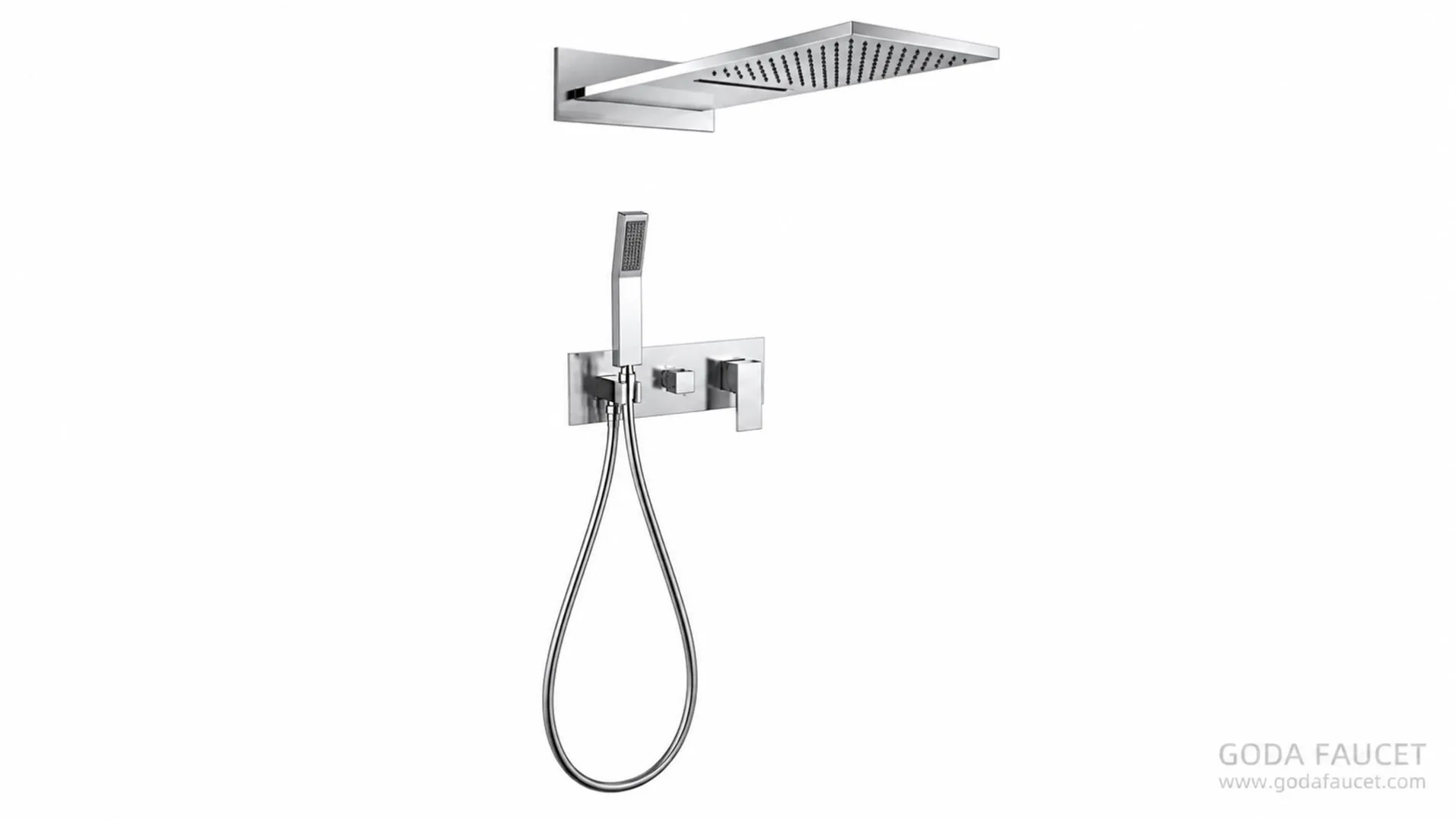
For a shower system wholesaler, customization must support a range that customers will buy and reorder. For a hotel or apartment project supplier, it must also fit the approved bathroom layout, installation schedule and maintenance plan. An attractive design alone does not answer either buyer's most important questions.
When sourcing OEM or ODM shower systems, start by defining what needs to change, who will develop it and how the result will be approved. A logo on an existing model, a revised control panel and a new concealed valve platform involve different costs, responsibilities and validation work.
This guide explains how importers, distributors, bathroom brands and project buyers can turn a customization request into a clear development brief—and a more useful factory quotation.
OEM vs ODM: Define the Work Before Comparing Suppliers
OEM commonly refers to manufacturing to a buyer's specifications or design. ODM commonly refers to a manufacturer-developed design that a buyer selects or adapts. In practice, suppliers may use these terms differently, particularly for catalog products with customized finishes or branding.
Ask each shower system manufacturer to describe the actual work included in its proposal.
Supply route | Typical scope | When buyers might consider it | Main point to confirm |
|---|---|---|---|
Existing model with private labeling | Approved catalog configuration with agreed logo, packaging or finish options | Wholesalers testing a range or supplying a defined project package | Exact model, customization options and order quantities |
Adaptation of an existing platform | Changes to selected visible components, configuration or interfaces, subject to feasibility | Distributors seeking differentiation or projects with specific requirements | Which components change and what must be checked again |
New product development | A design brief requiring engineering, prototypes and potentially dedicated tooling | Brands with a defined product strategy and repeat-order potential | Development scope, costs, responsibilities and approval stages |
These are purchasing routes, not guarantees of availability. Confirm feasibility for the selected product before presenting a customized solution to your customer.
Choose a Development Route That Fits Your Sales Channel
For wholesalers and importers: protect reorder flexibility
Consider a distributor launching a shower collection in two finishes. Before requesting a new handle or panel design, establish whether customers need that change—or whether an existing platform with a coordinated finish and branded packaging meets the sales requirement.
Ask how MOQ applies to the model, finish and customized component separately. A total order quantity does not necessarily tell you the minimum quantity for each variation. Also confirm how replacement components will be identified after the first shipment.
The useful comparison is the cost and complexity of maintaining the range over several orders, including slower-selling finishes and service parts.
For hotel and apartment projects: resolve interfaces before appearance approval
A project buyer may need one design across several room types, with different outlet configurations. Confirm whether those configurations share compatible components or require separate product codes and installation drawings.
For concealed shower systems, the valve body may be required before the visible trim. Ask whether separate delivery is possible, how each set will be matched and who will verify the installation interface. A finish sample approval should not be treated as approval of the concealed assembly.
If the installation category is still undecided, our concealed shower systems wholesale guide explains the broader selection factors.
Separate Cosmetic Changes From Engineering Changes
The word “custom” can hide very different requests. Divide your brief into the following groups so the factory can review each change accurately.
Appearance and branding. Specify finish references, surface texture, logo position and visible component proportions. Ask for physical finish samples where color matching matters; a screen image is not a reliable production reference.
Controls and outlet configuration. Identify the required outlets and how they should operate. State whether the requirement is outlet selection or simultaneous operation. Ask the manufacturer to confirm feasibility and the supply conditions needed for the proposed arrangement.
Installation interfaces. Provide available drawings, connection requirements and finished-wall references. Avoid assuming that a different control panel will fit an existing valve body just because both products look similar.
Packaging and project identification. Define the contents of each sales or room package, model labels, component labels and installation information. A project set should be identifiable without relying on a photograph of the finished bathroom.
Request a written change list showing what remains standard, what changes and what requires a new sample or additional verification.
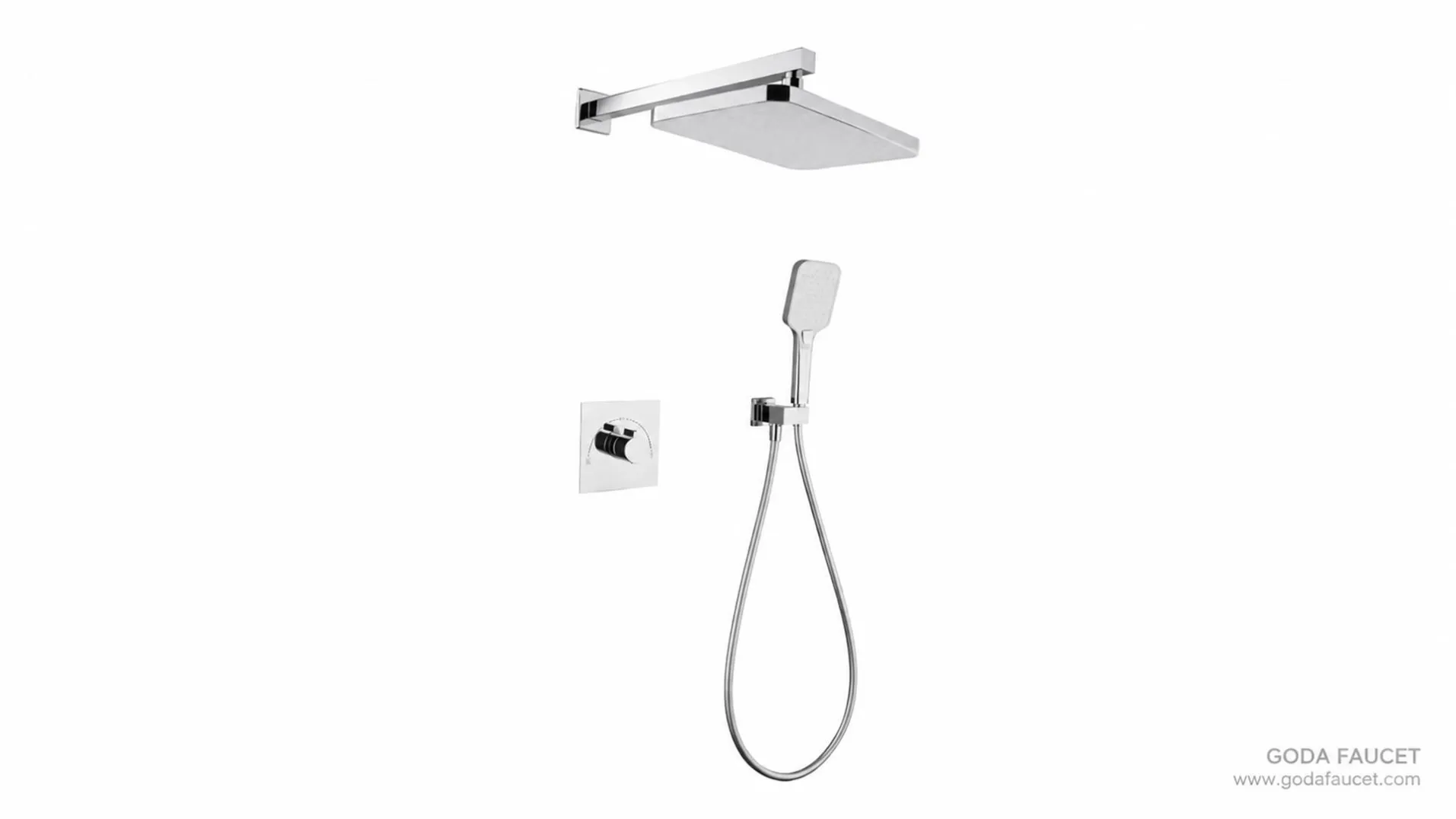
Product example: GD-11024 shows a coordinated overhead shower, control trim and hand shower. Confirm the configuration and installation interfaces for the selected order.
Confirm Tooling, Drawings and Exclusivity Separately
A customized appearance does not, by itself, explain how tooling, design files or sales arrangements will be handled. Treat these as separate discussion points before committing to development expenditure.
Ask the supplier to clarify:
- Which existing tools and components will be used, and which new tools are required?
- What does each development or tooling charge include?
- How will ownership, storage, maintenance and future use of dedicated tooling be documented?
- Which drawings or technical records will the buyer receive?
- Is any exclusivity proposed, and what products, markets, channels and duration would it cover?
- What happens to open development work and tooling if the program ends?
Keep these questions distinct from the unit-price negotiation. Record the arrangements agreed for the specific program rather than assuming that the label “OEM” or “ODM” settles them.
Compare Development Costs and Repeat-Order Costs
Ask for one-time charges and recurring costs to be shown separately. Depending on the scope, a proposal may include engineering work, prototypes, tooling, finish samples, packaging setup, testing or documentation, as well as the production unit price.
Use the same specification when comparing offers. Confirm whether the quotation includes the complete shower set, mounting hardware, hoses, labels and agreed packaging—or only selected components.
For wholesalers, compare the launch order with a realistic replenishment order. Can the same finish and component specification be repeated? How are small replacement-part orders handled?
For project suppliers, compare the proposed production and delivery stages with the construction schedule. Identify the required dates for drawings, mock-up installation, concealed components, visible trim and handover spares. Ask the factory to confirm a schedule after reviewing the actual scope; avoid building a customer commitment around an unconfirmed lead time.
Approve Samples in Stages
One sample may not demonstrate every part of a development program. Define what each approval covers and retain a record of unresolved points.
Approval stage | What to review | Useful approval record |
|---|---|---|
Specification and drawing review | Configuration, dimensions, interfaces, materials and component list | Dated specification with revision number |
Appearance review | Finish, texture, logo and visible proportions | Identified physical reference and approval notes |
Functional sample review | Control operation, outlet behavior, assembly and agreed performance checks | Results tied to the sample and test conditions |
Project mock-up, where applicable | Fit with the actual wall, pipework, layout and maintenance access | Installation photos and a list of required changes |
Production reference approval | Final components, finish, markings, accessories and packaging | Retained reference sample and approved packing list |
Confirm which samples use production-intent parts and which contain temporary prototype components. If a sample changes after approval, identify the affected items and agree whether another review is required.
A simple change record can contain: model code, revision, requested change, affected components, sample reference, cost impact, schedule impact and approval date. This helps purchasing, engineering and the project team work from the same version.
Match Documentation to the Destination and the Exact Model
Tell the manufacturer the destination market and any documentation requested by the importer, consultant or project specification before development begins.
Ask what evidence is available for the proposed model and configuration. Check the product identity, scope and issuing details of relevant documents. A report for a different assembly or an earlier configuration may not answer the requirements for your order.
Also clarify who will arrange any additional testing, which sample will be submitted and how a later component change will be reviewed. Product claims, test requirements and documentation should follow the confirmed order specification.
Send a Quote-Ready Shower System Development Brief
A detailed brief helps a factory distinguish an available product option from a new development request. Use the following checklist for a wholesale range or project inquiry.
Information to send | What to include |
|---|---|
Buyer and application | Importer, distributor, bathroom brand or project supplier; residential range, hotel, apartment or other application |
Destination | Country or market, plus any buyer or project documentation requirements |
Starting point | Catalog model, reference image or drawing; identify the features that must change |
Installation and functions | Concealed or exposed layout, outlets, control preference and available interface drawings |
Appearance | Finish reference, visible component requirements and branding |
Quantities | Quantity by model, configuration and finish; expected reorder or project phase quantities |
Commercial scope | Target price position and which development options should be quoted separately |
Schedule | Required sample, mock-up and delivery dates; flag fixed construction milestones |
Packing and service | Retail or project packaging, set contents, labeling and required spare parts |
If some specifications are undecided, mark them as open questions. That gives the factory a clear basis for proposing alternatives rather than quoting against hidden assumptions.
Questions Wholesale and Project Buyers Often Ask
Do all customized shower systems need new tooling?
No. Some requests can use existing products and components, while others require new tooling or engineering. Ask the manufacturer to identify the requirement for each requested change and quote it separately.
Can one shower design serve several hotel room types?
It may be possible, but the visible design does not establish compatibility. Confirm the valve, controls, outlets and installation requirements for each room type, then assign clear set and component codes.
What should a buyer approve before a bulk order?
Approve the final specification, relevant samples, finish reference, component list, packaging and agreed inspection requirements. For projects, resolve mock-up findings and installation interfaces before releasing the affected items for production.
Discuss Your Wholesale Range or Project With GODA
GODA is a brass faucet and shower system manufacturer in China serving wholesalers, importers, distributors, bathroom brands and project buyers. We support OEM/ODM inquiries involving finishes, branding, packaging and product specifications, with the available scope reviewed for the selected model and requirements.
Browse our faucet and shower system catalog to identify a starting model. For a wholesale range, send your destination market, preferred models, quantity by finish and branding requirements. For a hotel or apartment project, add the room schedule, available drawings, outlet configurations and required delivery stages.