
Oct 29, 2026Buying Guides
Faucet Spare Parts Planning for Wholesalers | GODA
Learn how faucet wholesalers can reduce after-sales costs with spare parts planning, model identification, inventory control and manufacturer support.
How Faucet Wholesalers Can Reduce After-Sales Costs with Spare Parts Planning
For faucet wholesalers, importers and bathroom brands, the cost of a product does not end when the shipment arrives. Missing accessories, replacement requests, incorrect parts and long service delays can all reduce profit and affect customer relationships.
A practical spare parts plan helps wholesalers respond to service requests without automatically replacing an entire faucet. It also makes inventory easier to manage and creates a clearer process between the distributor and the manufacturer.
As a brass faucet and shower system manufacturer, GODA understands the importance of coordinating product specifications, components and after-sales requirements before an order is placed. This guide explains how wholesalers can build a more manageable spare parts plan for their faucet collections.
1. Why Spare Parts Planning Matters to Faucet Wholesalers
When a customer reports a faucet problem, the distributor often becomes the first point of contact. The next steps can affect both the cost of resolving the issue and the customer's confidence in the brand.
Without an organized spare parts plan, wholesalers may face several challenges:
- Unplanned purchasing: Small components must be sourced urgently, sometimes with additional shipping costs.
- Incorrect replacements: Similar-looking parts may not fit the original faucet model.
- Unnecessary product replacement: A serviceable component issue may lead to a complete faucet replacement.
- Slow customer service: Staff may need extra time to identify the model, confirm compatibility and locate the correct part.
- Excess inventory: Buying spare parts without reviewing actual demand ties up working capital.
The goal is not to stock every possible component. It is to identify the parts most relevant to your product range, establish a reliable identification process and agree on a practical replenishment method with your supplier.
2. Which Faucet Replacement Parts Should You Consider?
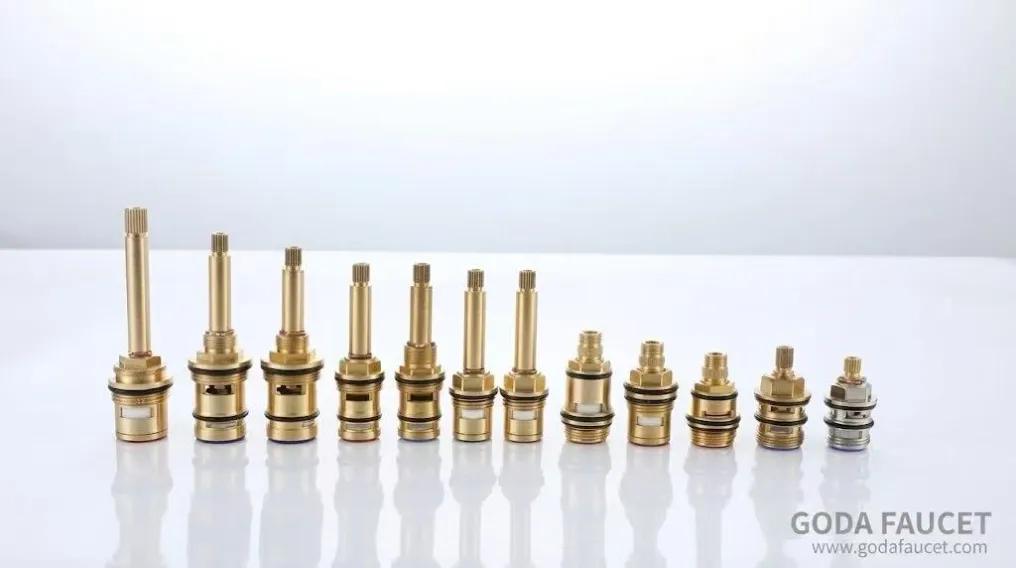
The correct spare parts depend on the faucet model, internal construction, water outlet design and installation configuration. Wholesalers should confirm compatibility with the manufacturer rather than assume that visually similar components are interchangeable.
Common service parts may include:
Spare part | What wholesalers should check |
|---|---|
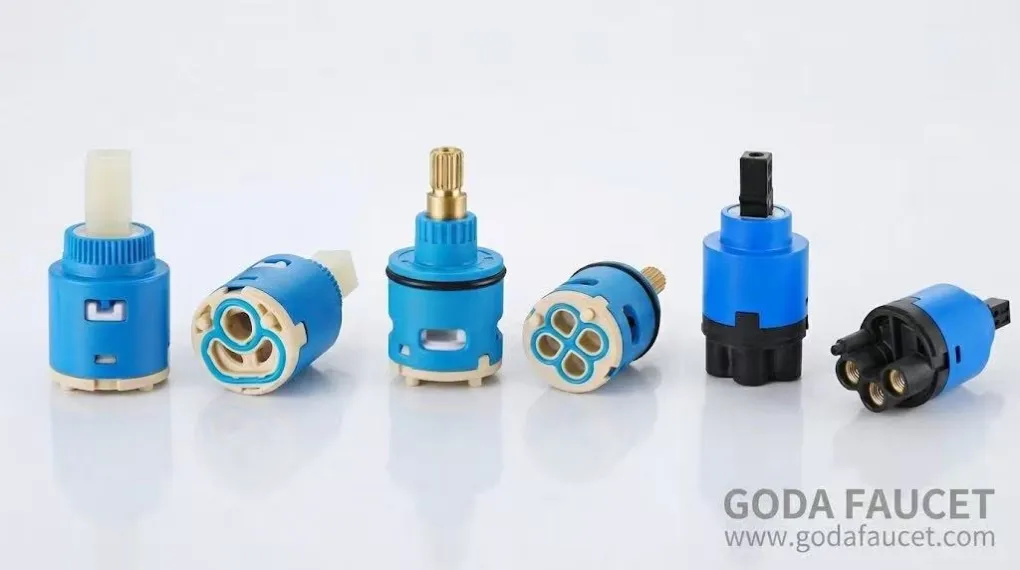
Ceramic cartridge | Cartridge dimensions, operating type and model compatibility |
Aerator or outlet component | Thread, size, flow design and whether it is removable |
Flexible supply hose | Length, connection type and market-specific requirements |
Seals and O-rings | Size, material and compatibility with the original assembly |
Handles and control components | Shape, fixing method, finish and model reference |
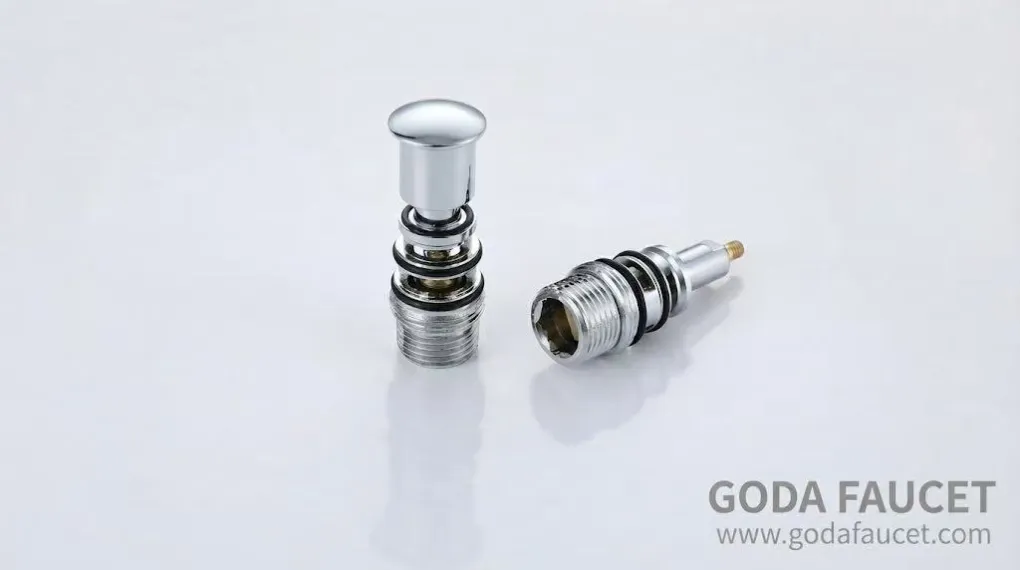
Mounting hardware | Thread size, installation configuration and included accessories |
Shower hose or hand-shower components | Connection type, length and compatibility with the shower set |
This table is a planning checklist, not a universal bill of materials. Not every item applies to every faucet, and some products may require model-specific components.
Before placing a bulk order, request a model-specific parts list and confirm which items can be purchased separately.
3. Start with the Products You Actually Sell
A wholesaler with dozens of models does not necessarily need a large inventory of spare parts for every product. Start by reviewing sales volume, installed customer base, service history and replenishment lead times.
A practical approach is to group products into three categories:
Core models
These are products with consistent sales or a substantial installed base. Confirm their service parts and consider keeping selected components available locally.
New or developing models
Begin with a documented parts list and monitor actual service requests. Avoid making large spare-parts purchases before demand becomes clearer.
Low-volume or special-order models
Confirm availability, lead time and minimum order conditions with the manufacturer before promising a replacement schedule to your customer.
This approach helps distributors prioritize inventory based on commercial importance rather than the number of models in the catalog.
4. Use Model Numbers to Prevent Parts-Matching Errors
A spare part is only useful when it matches the original product. A wrong cartridge, hose or mounting component can create another service request instead of solving the first one.
Build a simple parts reference for each important model. Include:
- Product model number and product category
- Spare part name and internal part number, where available
- Approved dimensions or technical reference
- Compatible product models confirmed by the manufacturer
- Finish requirements for visible components
- Supplier contact and replenishment lead time
- Date of the latest compatibility confirmation
Keep the same model and part references across quotations, purchase orders, packing lists, warehouse records and service requests.
For private-label products, ask the manufacturer to confirm how replacement components will be identified if the product name, logo or packaging differs from the factory's standard catalog.
Do not assume that a component fits an entire product series simply because the products share a similar appearance. Confirm compatibility before purchasing.
5. Choose Products with Practical Maintenance in Mind
Maintenance requirements can differ even between products in the same category. During product selection, wholesalers should review not only appearance and price but also how routine service can be performed.
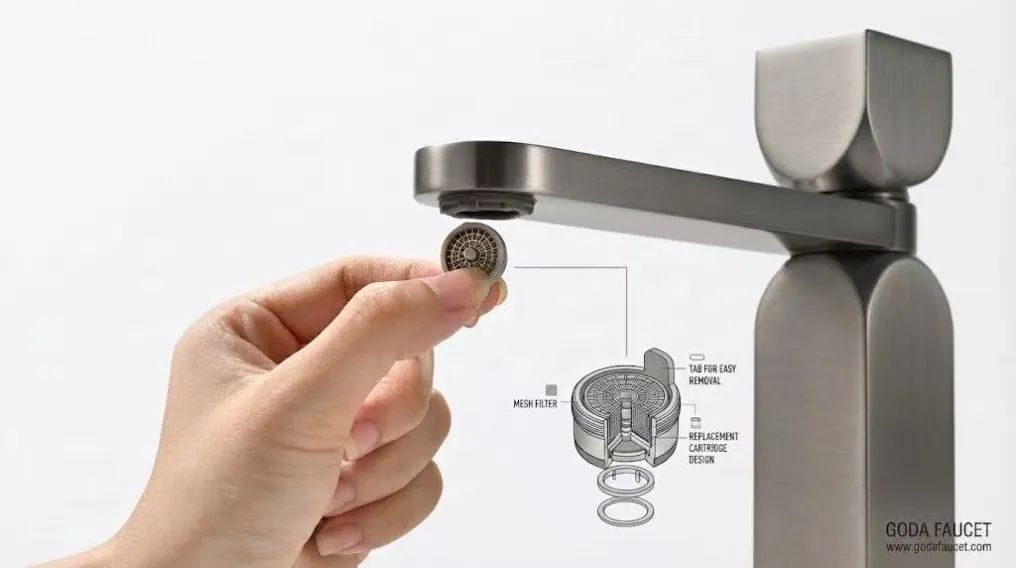
For example, the GODA GD-51026 brass basin faucet features two outlet modes: a focused water stream and a shower-style spray. Its removable outlet component supports convenient cleaning and routine maintenance.
This is a useful product-design consideration for distributors: a component that can be removed and cleaned may make certain maintenance tasks easier. It does not eliminate the need to confirm replacement availability or the correct service procedure.
When comparing other models, ask the factory:
- Which components are intended to be replaceable or serviceable?
- Are maintenance instructions available?
- Can the correct component be identified from a model number or parts diagram?
- Are any special tools required?
- Which components are model-specific?
- Can the factory confirm the current part reference before an order is placed?
These questions help wholesalers assess serviceability before committing to a product range.
6. Balance Spare Parts Inventory with Cash Flow
Too little inventory can delay customer service. Too much inventory can tie up capital in parts that may not be used.
A practical starting point is to classify parts according to demand, product importance and replenishment time.
High-priority parts
Consider selected parts for popular models, especially when a delay would significantly affect customer service. Base the decision on actual service history and confirmed supplier lead times.
Medium-priority parts
Keep a documented supplier reference and review demand periodically. Local stock may be appropriate if usage becomes consistent.
Low-frequency or model-specific parts
Where commercially practical, arrange a confirmed supply process with the manufacturer instead of automatically holding large quantities.
To estimate a starting stock level, wholesalers can use a simple planning formula:
Suggested stock = expected usage during replenishment lead time + agreed safety stock
For example, if your business typically uses 12 units of a particular service part during the time needed to replenish it, and you decide on a safety stock of 4 units, the initial planning quantity would be 16 units.
This is an illustrative calculation, not a forecast. Use your actual sales and service data, supplier lead times and purchasing constraints to set the quantity.
Review stock regularly and update the plan when sales volumes, product models or component specifications change.
7. Confirm Spare Parts Support Before Placing a Bulk Order
Spare parts should be discussed before production and shipment, not only after a customer reports a problem.
Ask your faucet manufacturer to clarify the following points:
Parts identification
Can the factory provide a model-specific spare parts list, reference images or diagrams where available?
Compatibility
Which components are shared across models, and which are unique? Request confirmation before treating any parts as interchangeable.
Availability and lead time
Which components can be supplied separately? What are the applicable lead times and minimum order quantities?
Packing and labeling
Can spare parts be packed and labeled by model or part reference to make warehouse picking easier?
After-sales procedure
What information should the distributor provide when reporting a suspected defect? Agree on the necessary photos, model number, order reference and other evidence.
Repeat-order consistency
How will changes to approved components or specifications be communicated? Confirm the process for matching replacement parts to previously shipped products.
The exact arrangements should be confirmed for each product and order. Do not promise customers a specific replacement schedule until availability and delivery timing have been checked.
8. Connect Spare Parts Planning with Quality Control
Spare parts planning does not replace quality control. It complements it by preparing the distributor to handle service requests when they occur.
Before shipment, verify that the approved specification, product model, included accessories and spare-parts requirements are documented. Confirm the packing list and labeling so warehouse staff can identify what belongs to each product.
For larger orders, agree on a clear process for recording reported issues and tracing them back to the relevant order or production batch, where applicable.
A useful service record should include:
- Product model and order reference
- Customer's description of the problem
- Photos or videos showing the issue
- Part identification, if known
- Quantity affected
- Resolution and follow-up status
This record helps wholesalers distinguish between an isolated service request and a recurring issue that may require further investigation with the manufacturer.
For a more detailed pre-shipment process, read our Faucet Sample-to-Bulk Quality Checklist for Wholesalers.
9. Build a Simple After-Sales Workflow for Your Team
Even a well-planned spare parts inventory is less effective if staff cannot identify and process requests consistently.
A simple workflow can include five steps:
- Record the request. Collect the product model, order reference, problem description and supporting images.
- Identify the component. Use the parts reference and confirm compatibility with the manufacturer if necessary.
- Check availability. Review local stock or request a confirmed supply lead time.
- Agree on the resolution. Determine whether the case requires cleaning guidance, a replacement component, additional investigation or another solution.
- Close the record. Track the outcome and update the parts plan if the issue reveals a recurring demand pattern.
This process makes service requests easier to track and helps the business learn from actual product usage.
10. How OEM and ODM Buyers Can Plan for Long-Term Support
For bathroom brands and private-label wholesalers, spare parts planning should be included in the product development and purchasing process.
Before approving a new range, discuss component identification, technical documentation, packaging, model references and potential replenishment needs with the factory.
If several products are being developed together, ask whether any components can be standardized without compromising product performance or compatibility. Shared components may simplify purchasing, but this should be confirmed by the manufacturer rather than assumed.
For private-label programs, keep a record of approved specifications and any model-specific changes. This is especially important when a product is reordered months or years after its initial launch.
GODA supports wholesale and project buyers with brass faucets, shower systems and OEM/ODM coordination. Spare-parts requirements, availability and supply arrangements should be reviewed against the confirmed models and order conditions.
11. A Spare Parts Planning Checklist for Faucet Wholesalers
Before confirming your next order, review these points:
- Identify the models that justify dedicated spare-parts planning.
- Request a model-specific spare parts list where available.
- Confirm compatibility and part references with the manufacturer.
- Identify high-priority parts based on service history and sales volume.
- Review supplier lead times and minimum order quantities.
- Confirm labeling and packing requirements for spare parts.
- Agree on the information required for after-sales claims.
- Keep records of approved specifications and product changes.
- Review inventory periodically to avoid excess stock.
- Update the plan when new models or recurring service issues appear.
A clear process helps wholesalers make more informed purchasing decisions and manage customer service with greater consistency.
Conclusion
Reducing after-sales costs is not simply a matter of buying more spare parts. It requires the right product information, accurate component identification, realistic stock planning and clear communication with the manufacturer.
For faucet wholesalers, a model-based spare parts plan can help reduce unnecessary replacement costs, improve response times and support stronger long-term customer relationships.
By discussing service requirements before the first bulk order, wholesalers can make after-sales support part of a more complete sourcing strategy.
Request a Factory Quote
Looking for a brass faucet and shower system manufacturer for your wholesale or private-label business?
Contact GODA to discuss your product range, model-specific spare-parts requirements, finish options, OEM/ODM needs and bulk-order plans.